INTERNAL AUDITOR CAREER GUIDE
Internal Auditor career guide covers SOX compliance, risk assessment, and internal audit job requirements, certifications, salary data, and career path.

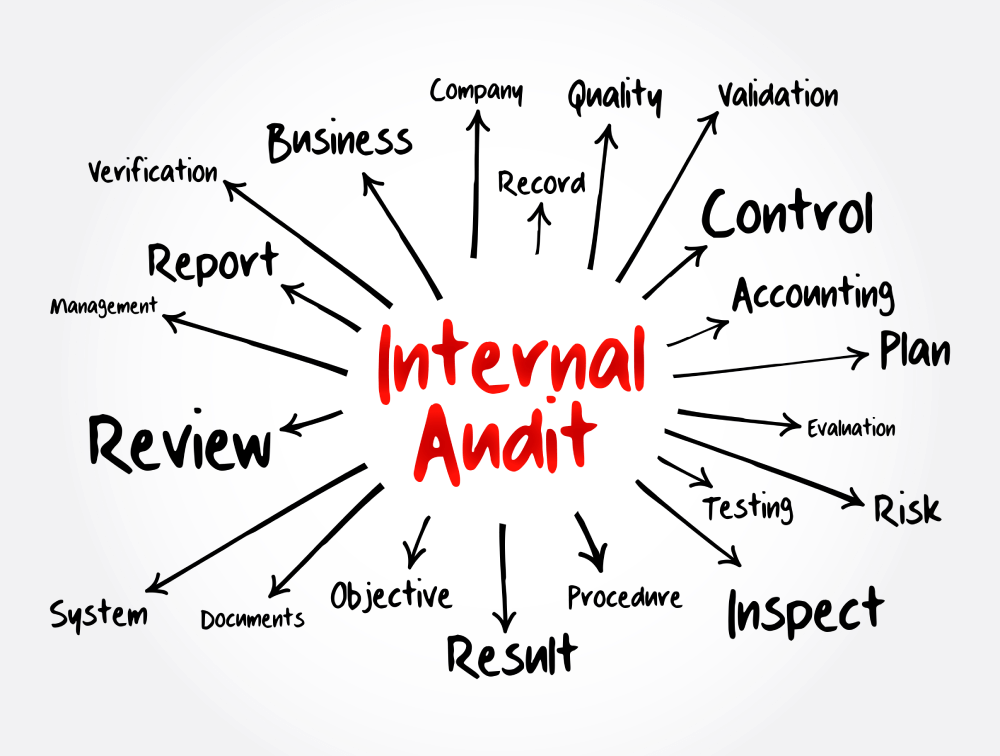
Internal Auditor Overview
1. What Is an Internal Auditor?
An Internal Auditor evaluates whether an organization's financial, operational, and compliance controls are functioning as intended. Day to day, this means conducting SOX walkthroughs, testing control design against the COSO framework, and preparing workpapers that document what was found and why it matters. The role sits within a company's own finance or risk governance structure, reporting to audit leadership and working alongside the business units being reviewed. Regulators, executives, and audit committees depend on this function to catch material weaknesses before external auditors do. Based on Lamwork's research across Internal Auditor job data, SOX compliance testing and risk-based audit execution are the two capabilities that appear most consistently across employer requirements at this level.
2. Internal Auditor Key Responsibilities
- Analyze financial, operational, and IT control environments to assess risk exposure and control adequacy.
- Execute risk-based audit procedures in line with the annual Internal Audit Plan and professional standards.
- Document workpapers with precise audit objectives, testing steps, results, and conclusions for management review.
- Identify control deficiencies and root causes, then recommend corrective actions proportionate to the risk.
- Communicate audit findings, status updates, and issue resolution timelines to the Internal Audit Manager and relevant business stakeholders.
3. Internal Auditor Required Skills
Lamwork's review of Internal Auditor postings shows that SOX compliance knowledge and data analysis capability are the two hard skills most consistently required across employer postings at this level.
- Hard Skills: Internal Controls Testing, SOX 404 And 302 Compliance, COSO Framework Application, Risk Assessment Methodology, Audit Workpaper Documentation.
- Soft Skills: Analytical Thinking, Professional Integrity, Stakeholder Communication, Organizational Discipline, Independent Judgment.
4. Internal Auditor Career Path
Typical Career Progression for an Internal Auditor:
- Staff Auditor
- Internal Auditor
- Senior Internal Auditor
- Internal Audit Manager
Reaching the Senior Internal Auditor level typically takes three to five years, depending on the pace of engagement exposure and whether professional certifications such as CPA or CIA are earned along the way. Advancement is driven most by demonstrated independence in leading audit engagements, the depth of SOX and COSO expertise accumulated, and the ability to communicate complex findings clearly to senior management.
5. Internal Auditor Certifications
Certified Internal Auditor (CIA) - the primary credential for internal audit practice, recognized globally.
Certified Public Accountant (CPA) - signals deep financial reporting and GAAP mastery valued by most employers.
Certified Information Systems Auditor (CISA) - preferred for roles with IT and IT general controls testing scope.
Certified Fraud Examiner (CFE) - strengthens credibility for forensic, compliance, and fraud risk audit work.
6. Internal Auditor Salary in the United States
The U.S. Bureau of Labor Statistics does not track Internal Auditor as a separate occupation. Based on the closest related role, Accountants and Auditors, the median annual salary is $81,680 per year, according to the most recent available data.
Pay for Internal Auditors varies most significantly by professional certification held, the complexity of the SOX environment they operate in, and whether the employer is a publicly traded company subject to SEC reporting requirements.
7. Internal Auditor Resume Tips
Quantify audit impact by including metrics such as the number of controls tested per engagement cycle, findings remediation rates, or the reduction in open audit observations over time, since vague claims of "supporting audits" carry little weight with hiring managers.
Highlight specific platforms and tools used for workpaper management, ERP testing, and data analytics such as audit management systems, large ERP environments, and data analysis software, using competency-based language that mirrors job description phrasing for ATS optimization.
Emphasize direct experience owning SOX 404 or 302 testing engagements from planning through reporting rather than describing audit support tasks, since employers at this level want evidence of independent execution, not assistance.
8. Internal Auditor Cover Letter Tips
Connect your specific SOX or COSO-based audit experience to the employer's industry context in the opening paragraph, since an internal auditor at a publicly traded manufacturing firm and one at a financial institution face genuinely different control environments, and showing that you understand the difference immediately signals fit.
Tie your control testing and workpaper documentation skills to concrete outcomes the hiring organization would recognize, such as reducing time to close audit findings or improving the quality of Audit Committee reporting, rather than listing activities without linking them to results.
Mirror the exact terminology from the job description when referencing compliance frameworks such as COSO, GAAP, or IIA Standards, and include technical nouns like SOX 404, risk control matrix, and entity-level controls, since these are the keywords ATS systems and hiring managers scan for first.
Frequently Asked Questions
1. Is Internal Auditor a Good Career?
Internal auditing offers strong career prospects. The broader accountants and auditors field is projected to grow 5 percent from 2024 to 2034, faster than the average for all occupations, with roughly 124,200 openings expected annually across the field. Demand for Internal Auditors within that group is reinforced by the ongoing compliance requirements that publicly traded companies face under Sarbanes-Oxley, which creates a durable baseline of hiring that is less sensitive to economic cycles than many comparable roles.
2. What Is the Difference Between an Internal Auditor and an External Auditor?
An Internal Auditor is employed by the organization being reviewed and focuses on ongoing control effectiveness, risk management, and process improvement across all business functions throughout the year. An External Auditor is an independent third party engaged to issue an opinion on financial statements for shareholders and regulators, with work concentrated in defined audit windows. Internal Auditors own the continuous monitoring of controls; External Auditors attest to the accuracy of reported financial results.
3. Is Internal Auditor a Hard Job?
The difficulty comes less from any single technical challenge and more from the breadth of what the role covers simultaneously. An Internal Auditor may be reviewing financial reporting controls in one engagement, assessing IT general controls in the next, and evaluating operational process efficiency in a third, all while maintaining documentation quality and meeting engagement deadlines. Managing that range of scope without losing rigor on any one area is the defining challenge at this level.
4. What Industries Hire the Most Internal Auditors?
Financial services lead demand for Internal Auditors, driven by the density of regulatory requirements, SOX compliance obligations at publicly traded institutions, and ongoing scrutiny from banking regulators. Manufacturing ranks second, where complex supply chains, cost accounting processes, and multi-site operations create broad internal audit scope. Healthcare employs the third largest concentration, with HIPAA compliance, government reimbursement audit exposure, and the scale of regulated financial transactions creating sustained need for audit coverage.
5. How Is AI Impacting the Internal Auditor Profession?
Routine data extraction, transaction sampling, and standard control test scripting are increasingly handled by automated tools, freeing Internal Auditors from the most repetitive elements of fieldwork. The work that still demands human judgment includes evaluating whether a control failure reflects a systemic breakdown or an isolated exception, communicating findings to resistant stakeholders, and designing audit approaches for novel risks that no automated tool has been trained to flag. Internal Auditors who deepen their fluency in data analytics and continuous monitoring methods will be better positioned to focus on the higher-judgment work that automation cannot replicate, rather than competing with it.
Editorial Process and Content Quality
This content is developed by the Lamwork Editorial Team using structured analysis of real-world job data, skill requirements, and hiring patterns.
Research framework by Lam Nguyen, Founder & Editorial Lead.
Reviewed by Thanh Huyen, Managing Editor.
Learn more about our editorial standards.