EDUCATIONAL TECHNOLOGIST SKILLS, EXPERIENCE, AND JOB REQUIREMENTS
Updated: Mai 29, 2025 - The Educational Technologist with a strong background in teaching adults, especially in higher education settings, and proficient in using Mac and PC environments, along with various peripherals such as microphones and digital cameras. Skilled in applying digital tools like learning LMS, Google Drive, and social media to enhance blended learning and create personalized professional learning opportunities. Demonstrates leadership in technology integration for effective instruction, with expertise in Microsoft Office, Google Drive, creative applications, and maker tools for innovative learning experiences.
Essential Hard and Soft Skills for a Standout Educational Technologist Resume
- Learning Management Systems (LMS)
- Instructional Design
- E-learning Development
- Data Analysis
- Curriculum Development
- Technology Integration
- Video Editing Software
- Programming Languages
- Educational Software Tools
- User Experience (UX) Design.
- Communication
- Problem-Solving
- Adaptability
- Creativity
- Collaboration
- Time Management
- Critical Thinking
- Emotional Intelligence
- Leadership
- Attention to Detail.

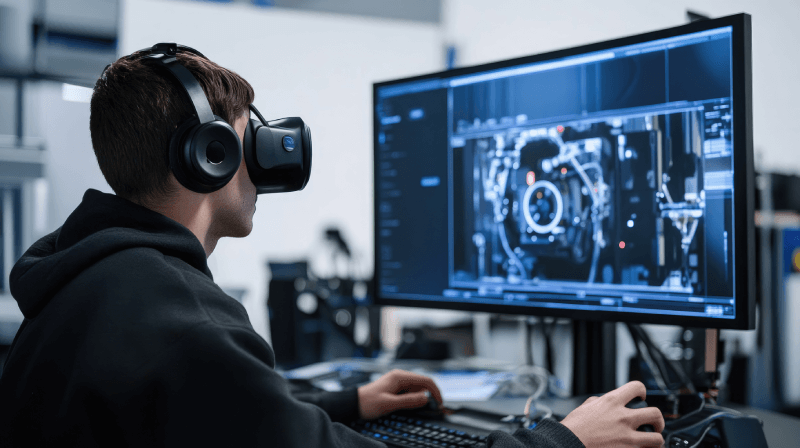
Summary of Educational Technologist Knowledge and Qualifications on Resume
1. BS in Educational Technology with 4 years of Experience
- Experience in collaborating online with other users, and instructing in a technology-rich classroom.
- Experience working with Canvas
- Proficiency in Microsoft Office Suites including but not limited to Excel, Word and PowerPoint.
- Familiarity with online learning management systems and up-to-date instructional technologies.
- Excellent time management skills
- Excellent communication, networking, and customer service skills.
- Ability to collaborate effectively with others and exercise sound professional judgment.
- Capable of working independently in an entrepreneurial environment.
- Demonstrated capacity to provide technology support at a distance.
- Detail-oriented with evidence of creativity, attention to detail, and collaborative approaches to work.
- Graphic design and audio/video editing experience
- Ability to work both independently and as part of a collaborative/team-based environment, working as an enthusiastic and flexible team member.
2. BA in Instructional Design with 5 years of Experience
- Experience and ability in teaching adults, preferably in a higher education environment.
- Ability to work efficiently and effectively in a Mac and PC environment and ability to operate various peripherals such as microphones and digital cameras.
- Excellent organizational, communication, leadership and interpersonal skills.
- Ability to apply digital tools (itslearning LMS, Google Drive, variety of social media tools, etc.) within educational settings to empower students and enable blended learning experiences.
- Ability to create and deliver effective and personalized professional learning opportunities in a variety of settings and mediums.
- Demonstrate ability to communicate effectively (verbal and written), interpret policies and procedures, reason, read, understand verbal instructions, analyze, differentiate, coordinate, compile, instruct and maintain emotional control.
- Responsible for the quality and timeliness of work, sets deadlines and completes work on time without additional prompting from supervisor.
- Experience as a leader of teachers and students in effective instructional use of technology (preferred).
- Experience with a variety of digital tools and resources including Microsoft Office, Google Drive, and a Learning Management System (LMS).
- Familiarity with creative and design applications, educational Web 2.0 tools, and social media resources.
- Experience designing lessons/learning pathways using digital tools and resources to facilitate effective instruction.
- Ability to learn a variety of maker tools used for 3D modeling, 3D printing, vinyl cutters, Arduino, Raspberry Pi, virtual reality and other tools used for additive and subtractive manufacturing purposes in a maker space.
- Experience with Canvas, Adobe Creative Cloud Software and Services, Microsoft Office applications
3. BS in Computer Science with 4 years of Experience
- Ability to contribute to an inclusive, equitable work environment and communicate with patrons, coworkers and students in a professional and customer service-oriented manner.
- Ability to learn a variety of web-based and client-installed programs used for creating websites, editing images, video and other multimedia
- Experience in instructional technology supporting faculty within a university environment
- Demonstrated experience working with Faculty in identifying pedagogical needs and integrating technological solutions
- Experience developing and delivering technical training to an audience with varying levels of technical understanding
- Experience supporting faculty on a Learning Management System such as Canvas, Blackboard, or Moodle
- Experience with managing course evaluations using software such as Explorance Blue Course Evaluation will be highly advantageous
- Knowledge of widely used hardware, software, applications, resources and techniques within an academic environment
- Experience with Statistical Packages, Web authoring tools, Web-based collaboration environments, video/lecture recording and editing tools, and presentation software
- Ability to initiate and complete instructional technology projects, manage a complex workload, prioritize tasks and use good judgment in providing services based on goals
- Ability to generate faculty enthusiasm for and engagement in the use of new technologies for teaching
- Excellent communication and interpersonal skills; ability to establish good working relationships with a wide range of people within the academic community
Editorial Process and Content Quality
This content is developed by the Lamwork Editorial Team using structured analysis of real-world job data, skill requirements, and hiring patterns.
Research framework by Lam Nguyen, Founder & Editorial Lead.
Reviewed by Thanh Huyen, Managing Editor.
Learn more about our editorial standards.