ACTUARIAL INTERN RESUME EXAMPLE
Actuarial Intern resume examples show pricing analysis and loss reserve work using Excel, SQL, and R across three experience levels.

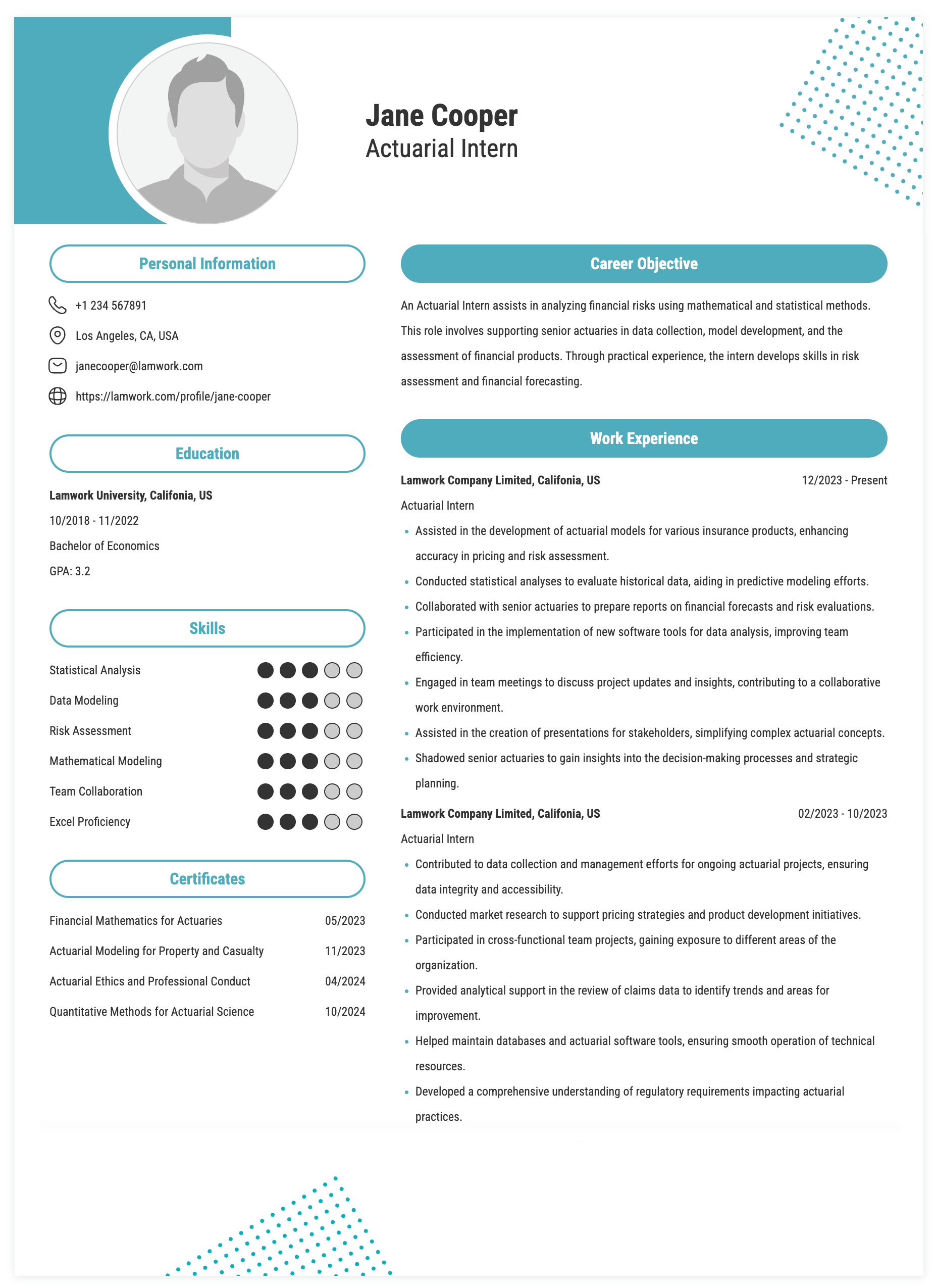
Actuarial Intern Resume by Experience Level
1. Entry-Level / Junior Actuarial Intern Resume
Ethan Walker
Chicago, IL
(312) 555-4821
ethan.walker18@gmail.com
https://www.linkedin.com/in/ethanwalker18
SUMMARY
Results-driven Actuarial Intern with 1+ years of experience in pricing analysis, reserve valuation, and actuarial modeling within the insurance industry. Proven record of improving reporting efficiency by 20% through spreadsheet automation and structured data validation processes. Expertise in actuarial reporting and predictive analytics to optimize pricing operations, mitigate reporting inaccuracies, and drive analytical decision-making. Strong background supporting valuation projects, financial forecasting, and underwriting analysis while collaborating effectively across actuarial and finance teams.
SKILLS
Actuarial Modeling
Reserve Analysis
Pricing Analytics
Data Validation
SQL Queries
Excel Automation
EXPERIENCE
Actuarial Intern
Midwest Benefit Analytics, Chicago, IL
June 2025 – Present
- Compiled and validated 15K+ policy and claims records supporting pricing analysis, reserve calculations, and quarterly actuarial reporting activities.
- Automated Excel-based actuarial reporting workflows, reducing manual reconciliation time by 22% across recurring valuation and pricing projects.
- Assisted with reserve projections and sensitivity analyses, supporting forecasting accuracy improvements for three commercial insurance product lines.
- Produced actuarial reports and financial summaries used by underwriting and finance teams to evaluate profitability and pricing trends.
Actuarial Analyst Intern
Prairie Risk Consulting, Naperville, IL
January 2024 – May 2025
- Supported actuarial ratemaking analyses by reviewing underwriting and claims data across 10+ client reporting assignments.
- Executed User Acceptance Testing procedures for pricing tools, identifying calculation inconsistencies, and improving reporting reliability by 18%.
- Maintained actuarial databases and updated valuation documentation supporting monthly reporting and regulatory filing preparation.
- Coordinated actuarial datasets from carrier portals and internal systems, improving reporting turnaround times by 15%.
EDUCATION
Bachelor of Science in Actuarial Science
University of Illinois Chicago
Automating Excel workflows alone won't prove broader fit, and the qualifications this posting spells out cover what interviewers probe deeper.
2. Mid-Level Actuarial Intern Resume
Madison Carter
Dallas, TX
(214) 555-7619
madison.carter.actuary@gmail.com
https://www.linkedin.com/in/madison-carter-actuarial
SUMMARY
Results-driven Actuarial Intern with 3+ years of experience in reserving analysis, predictive modeling, and financial forecasting within property and casualty insurance. Proven record of reducing actuarial processing time by 25% through workflow automation and model optimization initiatives. Expertise in pricing analysis and valuation modeling to optimize reporting accuracy, mitigate operational inefficiencies, and drive profitability insights. Extensive experience supporting regulatory filings, actuarial reporting, and enterprise-wide analytical initiatives within collaborative actuarial environments.
SKILLS
Reserve Forecasting
Predictive Modeling
Pricing Analysis
Financial Reporting
Process Automation
Risk Evaluation
EXPERIENCE
Senior Actuarial Intern
Lone Star Insurance Analytics, Dallas, TX
May 2024 – Present
- Developed pricing and reserving projections across 25K+ insurance records, improving forecasting consistency and supporting profitability evaluations.
- Enhanced actuarial reporting models through VBA and SQL automation, reducing monthly processing workloads by approximately 27%.
- Conducted deep-dive trend analyses evaluating claims severity, reserve movement, and underwriting performance across multiple insurance products.
- Supported rate filing documentation and audit-related requests, maintaining accurate actuarial assumptions and validation procedures.
- Collaborated with finance, claims, and underwriting teams to deliver analytical insights supporting strategic pricing initiatives.
Actuarial Operations Intern
Blue Ridge Financial Risk, Irving, TX
June 2022 – April 2024
- Maintained actuarial pricing and valuation systems supporting reserve calculations, financial reporting, and quarterly projection analyses.
- Assisted in catastrophe modeling and workers’ compensation exposure analyses across 40+ commercial insurance accounts.
- Built dashboards and actuarial visualizations, improving management visibility into pricing performance and reserve trends by 30%.
- Executed regression testing and valuation model validations supporting the successful implementation of two new actuarial reporting workflows.
EDUCATION
Bachelor of Science in Mathematics
Texas State University
3. Senior Actuarial Intern Resume
Jonathan Reynolds
Hartford, CT
(860) 555-1934
jonathan.reynolds.consulting@outlook.com
https://www.linkedin.com/in/jonathan-reynolds-fsa-track
PROFESSIONAL SUMMARY
Results-driven Actuarial Intern with 5+ years of experience in actuarial consulting, pension valuation, and enterprise risk analysis within life and commercial insurance sectors. Proven record of increasing actuarial reporting efficiency by 35% through automation, predictive modeling enhancements, and process redesign initiatives. Expertise in financial projections and actuarial modeling to optimize reserve management, mitigate pricing volatility, and drive operational performance. Strong background leading cross-functional analytical initiatives involving valuation systems, regulatory reporting, and long-term financial forecasting.
CORE SKILLS
Pension Valuation
Financial Modeling
Risk Analytics
Reserve Valuation
Data Integration
Regulatory Reporting
EXPERIENCE
Lead Actuarial Intern
Northeast Actuarial Partners, Hartford, CT
March 2023 – Present
- Directed actuarial valuation and pricing support activities across pension, healthcare, and commercial insurance engagements totaling 50K+ member records.
- Implemented advanced spreadsheet and Prophet model enhancements, reducing reserve reporting preparation time by 35% annually.
- Coordinated actuarial due diligence analyses for merger-related retirement benefit evaluations exceeding $12M in projected liabilities.
- Produced stochastic and deterministic financial projections supporting strategic retirement funding and enterprise forecasting initiatives.
- Delivered actuarial presentations and profitability analyses to executive stakeholders, strengthening pricing and reserve decision-making processes.
Actuarial Research Intern
Capital Harbor Risk Advisors, Stamford, CT
January 2021 – February 2023
- Conducted actuarial studies involving reserve sensitivity testing, catastrophe modeling, and underwriting trend analyses across multiple insurance portfolios.
- Developed SQL- and R-based actuarial reporting solutions, improving data validation accuracy and reducing reconciliation errors by 28%.
- Assisted regulatory filing preparation, including valuation documentation, annual statements, and actuarial model testing procedures.
- Supported asset-liability management analyses evaluating investment strategy impacts on participating fund and reserve performance metrics.
EDUCATION
Bachelor of Science in Actuarial Science
University of Connecticut
Sample ATS-Friendly Work Experience for Actuarial Intern Roles
1. Actuarial Intern, Summit Risk Analytics, Phoenix, AZ
- Validated actuarial and underwriting datasets, resolving client discrepancies and improving quote readiness accuracy across 100+ policy records before pricing and treaty evaluation workflows.
- Tracked 25+ concurrent quotation requests, coordinating timely stakeholder communication and maintaining organized documentation pipelines that supported consistent turnaround expectations for business development activities.
- Generated treaty and pricing quotations using standardized actuarial tools, contributing analytical support for risk evaluation, pricing assumptions, and internal reporting across three operational functions.
- Researched market and claims-related information across 2 pricing scenarios to strengthen assumptions, supporting evidence-based recommendations aligned with evolving underwriting and client expectations.
- Supported user acceptance testing for pricing platforms, identifying calculation inconsistencies, and assisting implementation improvements across 4 reporting workflows supporting actuarial operations.
- Compiled management reporting datasets and administrative analyses, enabling accurate monitoring of quotation activities, treaty documentation progress, and underwriting support requirements within monthly reporting cycles.
Core Skills:
- Actuarial Pricing
- Data Validation
- Treaty Documentation
- Risk Analysis
- Pricing Tools
- MIS Reporting
2. Actuarial Intern, Horizon Benefit Solutions, Tampa, FL
- Built Excel-based actuarial workbooks accommodating 50K+ policy records, streamlining carrier data imports and reducing manual processing time through structured automation enhancements and workflow redesign initiatives.
- Extracted and consolidated datasets from multiple carrier portals, ensuring reporting consistency and supporting accurate actuarial calculations, reserve evaluations, and downstream policy administration activities across quarterly cycles.
- Transformed actuarial reporting templates by redesigning calculation outputs and visualization structures, improving readability for underwriting stakeholders, and accelerating report preparation efficiency by approximately 30%.
- Conducted large-loss and reserve sensitivity analyses using actuarial methodologies, identifying data irregularities and supporting informed operational decisions through scenario-based analytical assessments and reporting validation.
- Optimized closing and reconciliation procedures by enhancing spreadsheet automation processes, reducing repetitive administrative tasks while strengthening accuracy controls across recurring financial and actuarial reporting activities.
- Expanded technical understanding of insurance products, sales operations, and policy administration workflows by proactively investigating cross-functional processes and contributing analytical insights beyond assigned project responsibilities.
Core Skills:
- Excel Automation
- Reserve Analysis
- Data Integration
- Sensitivity Testing
- Actuarial Reporting
- Process Optimization
3. Actuarial Intern, Meridian Insurance Group, Columbus, OH
- Developed actuarial pricing and reserving projections by analyzing large-scale policy and claims datasets, supporting forecasting accuracy and improving model-driven business recommendations across multiple reporting cycles.
- Enhanced pricing and reserving models through spreadsheet and coding improvements, contributing predictive refinements that reduced manual adjustments and strengthened consistency across actuarial evaluation processes.
- Presented analytical findings and profitability insights to cross-functional stakeholders, translating complex actuarial trends into actionable recommendations supporting finance, product, claims, and operational decision-making initiatives.
- Investigated trend deviations and rating factor impacts through deep-dive data reviews, resolving business questions by evaluating claim patterns, reserve movements, and product performance indicators.
- Supported regulatory filings and audit-related requests by validating actuarial assumptions, preparing supplemental reporting documentation, and addressing follow-up inquiries related to pricing and reserving methodologies.
- Collaborated with internal teams to assess new product and rating characteristic impacts, implementing process optimizations that accelerated reporting efficiency and strengthened actuarial workflow reliability by 25%.
Core Skills:
- Actuarial Modeling
- Reserve Forecasting
- Pricing Analysis
- Regulatory Reporting
- Trend Evaluation
- Process Automation
4. Actuarial Intern, Oakridge Financial Services, Nashville, TN
- Maintained and enhanced Microsoft Excel actuarial spreadsheets supporting 40+ recurring analyses, ensuring accurate projections, structured reporting outputs, and reliable data tracking across multiple operational projects.
- Updated existing analytical workbooks and developed ad hoc reporting templates, improving calculation efficiency while supporting timely evaluation of actuarial and business performance indicators.
- Created Visual Basic macros automating repetitive spreadsheet functions, reducing manual processing requirements and increasing reporting consistency for projection modeling and internal analytical workflows.
- Processed actuarial datasets by entering data, executing projections, consolidating result outputs, and generating analytical reports supporting forecasting, reserve evaluation, and operational decision-making activities.
- Managed database maintenance activities through SQL query modifications, data cleansing procedures, and structured manipulation using R, strengthening data integrity across multiple reporting and analytical processes.
- Executed documented SQL queries and adjusted R scripts supporting ongoing actuarial projects, demonstrating technical adaptability and maintaining organized datasets for recurring business and analytical requirements.
Core Skills:
- Excel Modeling
- SQL Queries
- R Programming
- VBA Automation
- Data Cleansing
- Projection Analysis
5. Actuarial Intern, Harborview Casualty Partners, Charlotte, NC
- Supported actuarial ratemaking analyses by reviewing commercial insurance data, contributing pricing insights, and assisting predictive modeling initiatives within a fast-paced startup-oriented actuarial environment.
- Prepared supporting documentation for rate filing justifications, validating actuarial assumptions, and organizing analytical evidence that strengthened reporting accuracy and regulatory submission readiness.
- Collaborated with actuarial and data science teams to enhance pricing models, incorporating third-party datasets that improved underwriting segmentation and increased predictive evaluation capabilities across multiple scenarios.
- Designed dashboards and data visualizations to monitor quarterly business performance metrics, enabling stakeholders to track reserve trends, pricing outcomes, and operational indicators more efficiently.
- Assisted quarterly reserve review activities by analyzing claims and financial reporting data, supporting accurate reserve projections, and strengthening consistency across actuarial reporting processes.
- Researched commercial lines insurance products and underwriting factors, proactively identifying analytical improvements that streamlined workflows and enhanced actuarial support for cross-functional business initiatives.
Core Skills:
- Predictive Modeling
- Reserve Analysis
- Rate Filing
- Data Visualization
- Pricing Analytics
- Underwriting Models
6. Actuarial Intern, Sterling Pension Advisors, Minneapolis, MN
- Supported cross-functional consulting projects by analyzing business data, contributing research findings, and assisting problem-solving initiatives addressing operational and strategic business challenges across multiple engagements.
- Evaluated complex datasets using analytical tools and structured methodologies, improving reporting accuracy and supporting evidence-based recommendations delivered to internal stakeholders and client-facing project teams.
- Prepared high-quality analytical materials and project documentation, ensuring alignment with professional standards while maintaining accuracy, clarity, and responsible handling of sensitive business information.
- Collaborated with diverse team members on 5+ project assignments, incorporating differing perspectives and demonstrating adaptability while balancing shifting priorities and competing project deadlines effectively.
- Investigated technical developments and emerging business practices independently, strengthening domain knowledge and contributing creative insights supporting continuous improvement across project execution activities.
- Communicated analytical conclusions clearly through concise presentations and written materials, proactively seeking feedback and applying professional skepticism to validate assumptions and strengthen deliverable quality.
Core Skills:
- Business Analysis
- Data Analytics
- Project Research
- Stakeholder Communication
- Process Evaluation
- Technical Reporting
Business analysis and stakeholder communication reinforce each other, and resume bullets that show these competencies get organized on one page.
7. Actuarial Intern, Crestline Analytics Group, Denver, CO
- Performed annual pension valuation analyses by reviewing participant census data and supporting actuarial calculations used to assess the long-term financial health of retirement benefit programs.
- Developed stochastic and deterministic financial projections for pension and post-retirement plans, contributing analytical insights supporting forecasting accuracy and strategic retirement funding evaluations.
- Coordinated asset-liability and merger due diligence studies with investment and consulting teams, assisting quantitative assessments for retirement obligations and employee benefit program comparisons.
- Supported retirement program design and cost analyses by evaluating plan benchmarks, employee contribution scenarios, and insured renewal financial impacts across multiple actuarial review assignments.
- Calculated pension and disability benefits for plan participants while assisting healthcare rate-setting analyses, including medical network evaluations and prescription cost impact assessments.
- Enhanced pension administration processes through system programming support, detailed reporting preparation, and collaborative analysis, strengthening client decision-making during negotiations and actuarial consulting engagements.
Core Skills:
- Pension Valuation
- Financial Projections
- Asset Liability
- Benefit Calculations
- Rate Setting
- Actuarial Reporting
8. Actuarial Intern, BluePeak Insurance Services, Dallas, TX
- Prepared special quotations, actuarial illustrations, and statistical reports supporting product performance monitoring, valuation activities, and monthly reporting requirements across multiple insurance product lines.
- Contributed to product development initiatives by performing experience studies and market comparisons, supporting pricing evaluations, and identifying competitive positioning opportunities through actuarial data analysis.
- Participated in product implementation and launch activities, executing User Acceptance Testing and regression validation processes that improved valuation data accuracy and strengthened operational readiness.
- Maintained customer and valuation databases containing 10K+ records, ensuring data integrity while producing statistical analyses supporting actuarial reporting and product-related business decisions.
- Supported valuation model conversion projects by validating calculation outputs, resolving testing discrepancies, and assisting with smooth transitions for newly implemented actuarial valuation frameworks.
- Assisted reinsurance reporting, monthly valuation processes, and ad hoc analytical projects, collaborating with cross-functional teams to deliver accurate actuarial insights under strict reporting timelines.
Core Skills:
- Valuation Modeling
- Experience Analysis
- User Testing
- Reinsurance Reporting
- Database Management
- Actuarial Pricing
9. Actuarial Intern, Redwood Actuarial Consulting, Portland, OR
- Collected and analyzed actuarial data supporting product development, pricing, reserving, and financial reporting initiatives, contributing insights that strengthened enterprise-wide profitability and risk management evaluations.
- Reviewed experience reports and manual rate analyses across multiple insurance datasets, identifying trends and supporting actuarial recommendations that improved forecasting accuracy and operational decision-making processes.
- Assisted actuarial teams with projection modeling and financial analytics, applying quantitative methodologies to evaluate business performance and support ongoing enterprise growth objectives.
- Collaborated with cross-functional stakeholders on actuarial reporting activities, communicating analytical findings clearly while supporting disciplined data-driven evaluations for strategic business initiatives.
- Supported risk management and pricing functions by organizing large-scale datasets and validating actuarial assumptions, improving reporting consistency, and strengthening analytical workflow efficiency by approximately 20%.
- Expanded actuarial and industry knowledge through professional development initiatives, demonstrating leadership potential, analytical curiosity, and adaptability while contributing effectively within collaborative team environments.
Core Skills:
- Risk Modeling
- Financial Forecasting
- Rate Analysis
- Data Analytics
- Actuarial Reporting
- Reserve Analysis
10. Actuarial Intern, Pioneer Health Analytics, Louisville, KY
- Supported actuarial valuation reporting by performing reserve calculations, embedded value analyses, trend evaluations, and data validation procedures across recurring financial reporting and actuarial monitoring activities.
- Enhanced valuation processes through worksheet redesign and tool development initiatives, improving efficiency for regulatory form preparation and reducing manual reporting effort across operational workflows.
- Updated valuation methodologies and process documentation regularly, ensuring accurate recordkeeping and strengthening transparency around actuarial assumptions, calculation procedures, and reporting results.
- Executed Prophet model operations, including run configuration, table maintenance, and result extraction, supporting consistent actuarial modeling outputs for participating fund and valuation management activities.
- Participated in Prophet User Acceptance Testing exercises, identifying calculation discrepancies and validating model accuracy to strengthen reliability across new actuarial modeling implementations and reporting processes.
- Analyzed participating policy features, bonus mechanisms, investment strategies, and asset-liability impacts, contributing analytical support for fund monitoring, policy value calculations, and ad hoc actuarial inquiries.
Core Skills:
- Prophet Modeling
- Reserve Valuation
- Embedded Value
- Asset Liability
- Data Validation
- Regulatory Reporting
11. Actuarial Intern, Fairmont Risk Management, Chicago, IL
- Provided technical actuarial support across pricing, valuation, modeling, experience analysis, and business analytics projects, contributing meaningful insights supporting disability and employee benefits operations.
- Maintained pricing, underwriting, and valuation systems by updating actuarial tools and validating analytical outputs, improving operational reliability across recurring actuarial workflow activities.
- Assisted actuarial teams with data-driven project work impacting business performance, applying quantitative analysis and problem-solving skills to support forecasting and reporting initiatives.
- Collaborated with cross-functional departments to understand corporate and actuarial functions, strengthening business knowledge while supporting communication across professional and analytical teams.
- Participated in enterprise networking and leadership sessions, demonstrating professional initiative and expanding actuarial industry understanding through continuous learning and collaborative engagement opportunities.
- Contributed to community-focused and team-based internship activities while balancing project responsibilities, showcasing adaptability, accountability, and long-term potential for actuarial development program advancement.
Core Skills:
- Actuarial Modeling
- Pricing Analysis
- Valuation Systems
- Business Analytics
- Underwriting Tools
- Experience Analysis
12. Actuarial Intern, Liberty Benefit Administrators, Atlanta, GA
- Supported actuarial and underwriting teams with profitability analyses evaluating claim trends, pricing performance, and emerging business opportunities across multiple commercial insurance product segments.
- Assisted development and maintenance of rating plans used by business units, contributing analytical support that improved pricing consistency and strengthened monitoring of underwriting performance indicators.
- Participated in assigned actuarial projects and monthly price monitoring activities, applying quantitative analysis and problem-solving skills to support operational and strategic business objectives.
- Collaborated with professional staff and project teams on supplementary analyses and special assignments, delivering accurate reporting outputs while strengthening technical and actuarial expertise development.
- Maintained compliance with organizational procedures and system security requirements, ensuring responsible handling of actuarial data and adherence to established operational governance standards.
- Expanded knowledge across casualty, property, and specialty insurance lines while supporting project implementation activities, demonstrating adaptability and contributing effectively within cross-functional actuarial environments.
Core Skills:
- Profitability Analysis
- Rating Plans
- Price Monitoring
- Claims Analysis
- Underwriting Analytics
- Risk Evaluation
13. Actuarial Intern, Northgate Financial Solutions, Kansas City, MO
- Compiled and validated large actuarial datasets supporting pricing, reserving, and experience analysis models, ensuring reliable inputs for financial projections and business performance evaluations.
- Calculated insurance rates and performed pricing analyses across multiple scenarios, contributing data-driven recommendations that strengthened actuarial decision-making and product evaluation processes.
- Prepared supporting documentation for product filings and financial reporting activities, maintaining clear records of actuarial assumptions, methodologies, validation procedures, and analytical conclusions.
- Developed, tested, and maintained actuarial models used for reserving and sensitivity analysis, improving model accuracy while supporting efficient forecasting and operational reporting workflows.
- Automated recurring actuarial processes and data summarization tasks, reducing manual effort and increasing analytical efficiency across reporting, validation, and model maintenance activities by approximately 25%.
- Communicated actuarial findings and business insights to technical and non-technical stakeholders, collaborating effectively across departments to support model implementation and strategic analytical initiatives.
Core Skills:
- Actuarial Modeling
- Pricing Analysis
- Reserve Forecasting
- Data Validation
- Process Automation
- Sensitivity Analysis
While this block covers sensitivity analysis and automation gains, salary and certification progression for this role goes further from here.
14. Actuarial Intern, Everstone Consulting Group, Salt Lake City, UT
- Supported retirement actuarial valuation projects by proofreading reports, validating spreadsheet calculations, and assisting experienced actuaries with pension and non-valuation analytical assignments.
- Prepared government filings, benefit calculations, withdrawal liability analyses, and QDRO-related documentation, ensuring accurate reporting and compliance across multiple retirement administration processes.
- Compiled and analyzed actuarial and catastrophe modeling datasets, producing statistical summaries and presentation materials supporting risk evaluations and actuarial research initiatives.
- Coordinated workers’ compensation exposure, coverage, and loss data for individual accounts, improving quote preparation accuracy and supporting ongoing client service deliverables across insurance operations.
- Delivered actuarial analysis inputs supporting insurance quotation workflows and in-force portfolio maintenance, collaborating with team members to resolve account data inconsistencies efficiently.
- Enhanced operational processes through research, workflow updates, and analytical support projects, contributing to process improvements that streamlined reporting activities and strengthened actuarial data management practices.
Core Skills:
- Valuation Analysis
- Benefit Calculations
- Risk Modeling
- Data Validation
- Government Filings
- Loss Analysis
Position your loss analysis work on a resume that gets shortlisted.
Resume Standards 2026
Lamwork's key guidelines and best practices for writing a professional, ATS-friendly resume.
1. Contact Information
Name, phone number, professional email, LinkedIn, portfolio (if applicable)
2. Professional Summary (2-3 lines)
Role + years of experience + key strengths
3. Work Experience
Title + company + dates
Bullet points: action verbs + metrics + impact
Add context (what/why) when needed
Not recommended: Increased sales by 20%
Recommended: Increased B2B sales by 20% by optimizing outreach strategy
4. Skills
Hard skills only + match job description keywords (ATS)
5. Education
Degree, school, year (GPA if strong)
6. Projects (if relevant)
Name + tools + outcomes
7. Format
0-5 years: 1 page
5-10 years: up to 2 pages
Clean font, no photo, no personal details
8. ATS Optimization
Use exact keywords from the job description
Avoid tables or columns
Example:
Job says "Data Analysis" -> use "Data Analysis"
Do not change it to "Analyzing Data"
9. Do Not Include
Photo, age, gender, full address, references
10. Final Check
No typos, consistent verb tense, tailored for each job
File name: FirstName_LastName_Resume.pdf
Editorial Process and Content Quality
This content is developed by the Lamwork Editorial Team using structured analysis of real-world job data, skill requirements, and hiring patterns.
Research framework by Lam Nguyen, Founder & Editorial Lead.
Reviewed by Thanh Huyen, Managing Editor.
Learn more about our editorial standards.