CLINICAL NURSE EDUCATOR SKILLS, EXPERIENCE, AND JOB REQUIREMENTS
Updated: Nov 24, 2024 - The Clinical Nurse Educator brings robust skills in designing, implementing, and evaluating educational programs tailored to healthcare professionals. Proficient in the use of Learning Management Systems and web-based training, this role emphasizes leadership and teaching abilities, underpinned by a deep understanding of healthcare legislation. Demonstrated expertise in fostering professional growth among staff through dynamic coaching, mentoring, and supportive communication is a cornerstone of this position.
Essential Hard and Soft Skills for a Standout Clinical Nurse Educator Resume
- Clinical expertise
- Curriculum development
- Patient care standards
- Advanced Cardiac Life Support (ACLS)
- Pharmacology knowledge
- Medical software proficiency
- Research methodologies
- Evaluation techniques
- Simulation and training technology
- Disease management
- Communication
- Empathy
- Leadership
- Adaptability
- Problem-solving
- Critical thinking
- Team collaboration
- Mentorship
- Cultural competence
- Conflict resolution

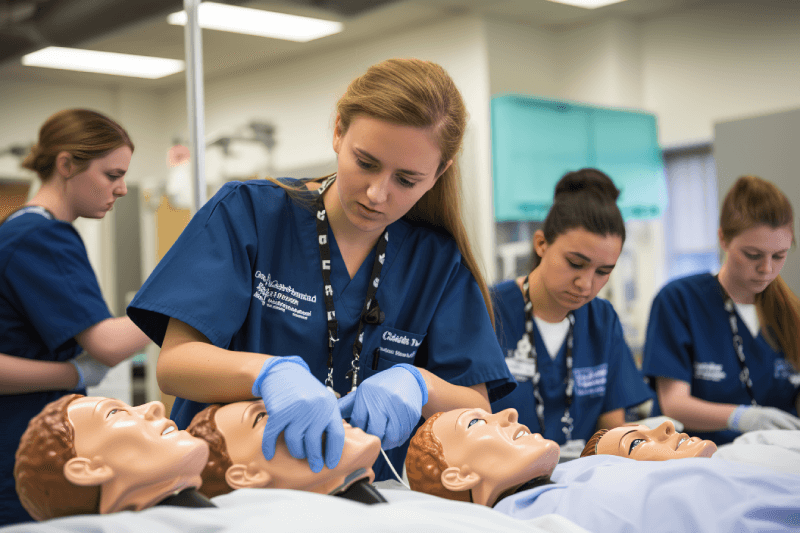
Summary of Clinical Nurse Educator Knowledge and Qualifications on Resume
1. BA in Health Education with 2 years of Experience
- Experience at proficient to expert level of practice
- Knowledge of adult learning principles as evidenced by the ability to facilitate learning for patients/families, nursing staff or other members of the healthcare team.
- Highly effective teaching and communication skills.
- Understands and applies adult learning principles.
- Strong meeting facilitation and group process skills.
- Ability to work effectively in teams, and independently.
- Knowledge of Lean and quality improvement principles
- Ability to apply Lean and quality improvement processes.
- Ability to collaborate with staff and leadership to implement change.
- Experience with following guidelines outlined in Legacy’s Values in Action.
2. BS in Nursing Education with 3 years of Experienc
- Current, active licensure as a Registered Nurse
- Experience as a licensed RN with direct patient care
- Ability to work flexible hours, during days, nights and/or weekends as necessary
- Highly effective teaching and communication skills.
- Understands and applies adult learning principles.
- Strong meeting facilitation and group process skills.
- Ability to work effectively in teams, and independently.
- Knowledge of Lean and quality improvement principles
- Ability to apply Lean and quality improvement process.
- Ability to collaborate with staff and leadership to implement change.
3. BS in Health Sciences with 4 years of Experience
- Experience with demonstrated clinical excellence in critical care and cardiovascular care, specifically the Catheter Lab (i.e. experience performing angiograms, angioplasty, and caring for the acute ST Elevated Myocardial Infarction Patient).
- Professional Practice experience
- Critical Care certificate with consideration given to those with Coronary Care I & II.
- Intra-aortic Balloon Pump experience
- Current BCLS and ACLS
- Excellent verbal and written communication skills.
- Registered Nurses of Ontario Membership (RNAO)
- Demonstrated ability to manage change and foster an environment that promotes professional development.
- Excellent organizational skills and ability to handle multiple projects at one time.
- Demonstrated ability to achieve goals and objectives within a specified time frame.
- Excellent problem-solving and critical-thinking skills.
4. BS in Clinical Practice Management with 3 years of Experience
- Experience with professional RN
- Experience in Critical Care department nursing
- Ability to assess, plan, implement, and evaluate education programs.
- Able to demonstrate competency in leadership skills, learning/ facilitation, and interpersonal communication skills.
- Ability to present content-specific training to a specific audience with measurable outcomes.
- Knowledge/skills in needs assessment, curriculum and materials development, implementation, and evaluation of education programs
- Experience with Learning Management System (LMS) and creating web-based training
- Experience in a leadership or teaching role
- Familiarity with pertinent legislation related to institutional health care and health care providers.
- Demonstrated ability to energize, coach, mentor, encourage, and support.
5. BA in Educational Leadership with 2 years of Experience
- Ability to work independently and as part of a team
- Ability to solve problems creatively
- Strong interpersonal and conflict resolution skills
- Strong customer service skills
- Current Washington State Registered Nurse license
- BLS instructor and NRP certification
- Healthcare Provider (CPR) certification
- ACLS certification with of the start date in an educator role
- The ability to plan and deliver formal presentations (large and small groups)
- The ability to display decisiveness and good judgment in clinical and business situations
Editorial Process and Content Quality
This content is developed by the Lamwork Editorial Team using structured analysis of real-world job data, skill requirements, and hiring patterns.
Research framework by Lam Nguyen, Founder & Editorial Lead.
Reviewed by Thanh Huyen, Managing Editor.
Learn more about our editorial standards.