WHAT DOES A WELDER DO?
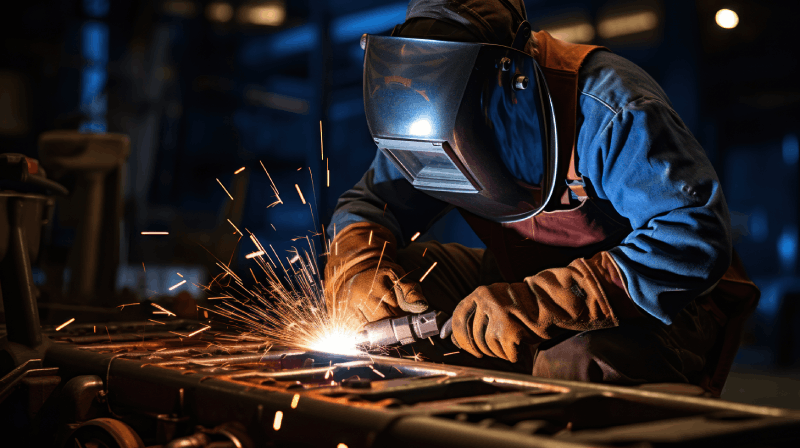
Published: Dec 29, 2025 - The Welder performs precise welding and fabrication to join metal components into durable structures and assemblies. This role reads technical drawings, selects appropriate welding methods, and operates tools and equipment to meet quality and safety standards. The individual also inspects welds, maintains equipment, and supports efficient production by following safety procedures and meeting project requirements.

A Review of Professional Skills and Functions for Welder
1. Welder Duties
- Project Planning: Develops welding projects by analyzing work orders, prints, and completed assembly.
- Requirement Estimation: Calculating requirements, studying metals, and determining appropriate welding techniques.
- Material Preparation: Collects equipment and materials by studying specifications and component requirements.
- Supply Ordering: Ordering supplies and gases.
- Metal Fabrication: Fabricates components by using equipment to clean, prepare, cut, burn, and weld pieces.
- Assembly Setup: Setting up and measuring assemblies, selecting the appropriate method.
- Quality Inspection: Verifies welding results by inspecting and testing welds.
- Safety Compliance: Maintains a safe work environment by following procedures.
- Legal Compliance: Complying with legal regulations.
- Equipment Operation: Keeps equipment operating by following operating instructions.
- Equipment Maintenance: Troubleshooting breakdowns, maintaining supplies, performing preventive maintenance, and calling for repairs.
2. Welder Details
- Welding Coordination: Collaborate with the lead welder to ensure that the proper weld procedure, type of material and rod size are accurately assessed for each welding project.
- Technical Planning: Analyze engineering drawings and specifications to plan welding operations where procedural information is unavailable.
- Process Improvement: Make a continuous effort to improve operations, decrease turnaround times, streamline work processes, and work cooperatively and jointly.
- Structure Fabrication: Weld assembly and fabrication of various small to large-scale structures and assemblies.
- Team Communication: Effectively communicate with management/supervisors, engineering staff and planners to achieve build efficiency.
- Vehicle Assembly: Modify, repair, assemble, and install launch vehicles.
- Quality Verification: Check work after completion of each operation in the job and/or completed job to ensure it is complete per drawing.
- Hazard Handling: Handle and dispose of hazardous materials in an approved manner.
- Tooling Installation: Install and assemble custom and off-the-shelf tooling and machinery for building the primary tank structure.
- Safety Setup: Set up of safety equipment and work platforms at elevation.
- Equipment Operation: Operate general shop equipment and vehicles (forklifts, boom lifts, scissor lifts, etc.).
3. Welder Responsibilities
- Welding Operations: Set up and operate welding equipment to perform TIG and MIG welding operations on a variety of mild steel, aluminum, and stainless-steel components.
- Technical Planning: Analyzes engineering drawings and specifications to plan layout, assembly, and welding operations.
- Part Fitting: Clamping, holding, tack-welding, heat-bending, bolting, or grinding spare parts to satisfy the technical requirements and create a welded final product.
- Tooling Design: Develops templates and other work aids to hold and align parts.
- Arc Welding: Operating other accessory equipment and performing some tasks necessary for welding metal, such as fusing metal segments, using gas tungsten arc, metal arc, flux-cored arc, plasma arc, and other types of welding arcs.
- Enclosure Fabrication: Weld and square up commercial-grade electrical enclosures and sub-assemblies.
- Machine Operation: Operate a small fabrication machine, an exam band saw, a drill press, and a power shear.
- Task Execution: Complete jobs assigned by the Metal shop supervisor.
- Tool Setup: Being in charge of preparing and setting up necessary tools and equipment for welding jobs, such as shielded metal arc, gas metal arc, or other welding equipment.
4. Welder Accountabilities
- Quality Planning: Develop and maintain Quality Plan (PQP), Quality Control (PQC), CAV, Welding book, WPS/PQR, and Welder qualification that assure engineering and customer requirements are met throughout the production process.
- Root Cause Analysis: Lead root cause analysis for all welding quality defects and/or findings.
- Corrective Actions: Supervise for implementation of corrective action and preventative action for welding quality issues.
- Failure Analysis: Analyze failure, provide corrective and preventive action to respond to customer complaints.
- Supplier Quality: Provide clear welding technical requirements to the supplier and follow up with SQE to have the supplier provide root cause, corrective and preventive actions for all quality defects.
- Design Coordination: Act as a single contact to work with the Design Engineer for welding technical clarification and get approval for a repair plan.
- Technical Instruction: Provide welding technical instruction to operators and others to ensure that products and processes comply with the relevant requirements of the welding quality of the products.
- Quality Training: Develop and provide necessary training to employees to build welding quality awareness to drive continuous improvement.
5. Welder Functions
- Container Maintenance: Performs repairs and maintenance on front, rear, and roll-off containers.
- MIG ARC Welding: Weld steel and aluminum components using MIG and ARC welding equipment.
- Metal Fabrication: Fabricates steel components using a brake and shear.
- Steel Cutting: Cuts steel using a plasma cutter or torch.
- Hopper Fabrication: Fabricates steel components for hoppers, containers, and compactors.
- Component Installation: Installs lids and wheels on containers.
- Safety Compliance: Follows all safety policies and procedures.
- Decal Installation: Install company and safety decals in accordance with the company standard diagram on containers and roll-off boxes.
Editorial Process and Content Quality
This content is developed by the Lamwork Editorial Team using structured analysis of real-world job data, skill requirements, and hiring patterns.
Research framework by Lam Nguyen, Founder & Editorial Lead.
Reviewed by Thanh Huyen, Managing Editor.
Learn more about our editorial standards.