BANQUET CHEF SKILLS, EXPERIENCE, AND JOB REQUIREMENTS
Updated: Oct 13, 2024 - The Banquet Chef with expertise in staying abreast of dining trends and new techniques ensures all culinary products consistently meet high standards of quality and appearance. Skilled in managing diverse environments, this chef excels in profit control, stock management, wastage reduction, and upholding strict hygiene practices, while training staff to excel in food preparation. Possessing experience in high-pressure, fast-paced settings, the chef maintains professionalism, adapts to flexible schedules, and rigorously enforces food safety and sanitation protocols.
Essential Hard and Soft Skills for a Standout Banquet Chef Resume
- Menu planning
- Advanced cooking techniques
- Food safety and sanitation
- Budgeting and cost control
- Inventory management
- Knowledge of dietary restrictions
- Baking and pastry skills
- Catering and event coordination
- Knife skills
- Equipment maintenance
- Leadership
- Team management
- Communication
- Time management
- Stress tolerance
- Creative thinking
- Problem-solving
- Attention to detail
- Flexibility
- Customer service

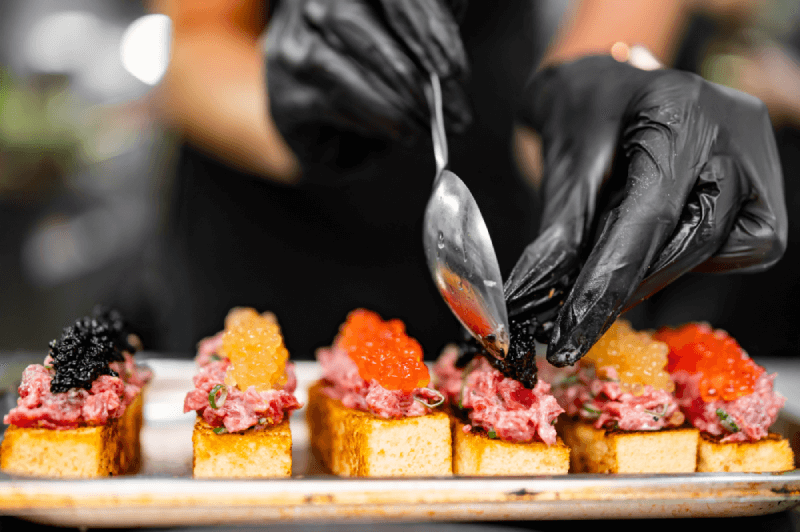
Summary of Banquet Chef Knowledge and Qualifications on Resume
1. BS in Culinary Arts with 4 years of Experience
- Cooking experience including high end high volume luxury hotel and Catering
- Must have experience and be proficient in both a la carte and production cooking
- Excellent interpersonal and communication skills
- Experience in a Unionized Culinary environment a definite advantage.
- Aspires to become an Executive Chef with Fairmont Hotels and Resorts
- Must be an effective supervisor, trainer, administrator and team player with strong leadership and organizational skills
- Must be innovative, detail oriented and quality conscious
- Must be innovative, detail-oriented and quality-driven
- Knowledge of the practices and procedures of the food and beverage, hospitality and catering businesses
- Develop new menu items and recipes
2. BA in Hospitality Management with 3 years of Experience
- Experience in staying up to date on dining trends and new techniques
- Ability to manage in a diverse environment with a focus on customer services
- Experience in managing areas of profit, stock, wastage control, hygiene practices and training within the kitchen
- Experience in ensuring all products are prepared in a consistent manner and meet departmental appearance/quality standards
- Ability to work in a fast-paced, high energy and demanding environment while maintaining the highest standard of professionalism
- A flexible schedule with the ability to work day, evening and weekend hours as business needs require
- Experience in ensuring compliance with food handling and sanitation standards.
- Experience in training develops and motivates supervisors and culinary staff to meet and exceed established food preparation standards on a consistent basis
- Banquet kitchen management experience
- Ability to efficiently identify issues and problem solve
3. BA in Food Service Management with 4 years of Experience
- Experience in a managerial position of a high-volume food service establishment/ catering/ events preferred.
- Proficient with Microsoft Office
- Experience with Caterease and SAP desired
- Excellent communication skills, both written and verbal required
- Strong leadership, excellent interpersonal skills, and problem-solving abilities
- Ability to work days, nights and weekends; when required
- An effective communicator with a positive attitude and a team player mentality.
- Knowledge of management methods and techniques.
- Advanced troubleshooting and multi-tasking skills, ability to prioritize
- Commitment to quality, accuracy, timeliness and results
Editorial Process and Content Quality
This content is developed by the Lamwork Editorial Team using structured analysis of real-world job data, skill requirements, and hiring patterns.
Research framework by Lam Nguyen, Founder & Editorial Lead.
Reviewed by Thanh Huyen, Managing Editor.
Learn more about our editorial standards.