LAB CHEMIST SKILLS, EXPERIENCE, AND JOB REQUIREMENTS
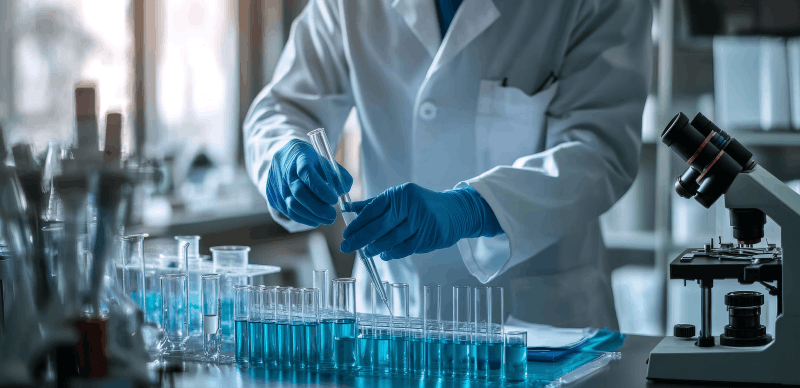
Published: Dec 31, 2025 - The Lab Chemist conducts chemical analyses and testing in laboratory settings, with a focus on environmental, industrial, and hazardous waste materials. This role requires a solid foundation in math and chemistry, hands-on experience with lab tools and test equipment, as well as proficiency in Microsoft Office for documentation and reporting. The chemist also demonstrates strong organizational skills, takes initiative, collaborates effectively in a team environment, and engages with customers in support of business-driven projects.
Essential Hard and Soft Skills for a Standout Lab Chemist Resume
- Sample Analysis
- Instrument Calibration
- Equipment Maintenance
- QA/QC Compliance
- Method Validation
- Data Interpretation
- SOP Adherence
- Chemical Handling
- Waste Management
- Regulatory Compliance
- Safety Mindset
- Problem Solving
- Team Collaboration
- Training Others
- Attention To Detail
- Time Management
- Organizational Skills
- Technical Communication
- Initiative
- Customer Support

Summary of Lab Chemist Knowledge and Qualifications on Resume
1. BS in Chemistry with 2 years of Experience
- Clear communicator, both written and verbal
- Ability to work well in a group or individually
- Demonstrated organizational skills
- Ability to follow written Standard Operating Procedures (SOPs) and protocols
- Ability to solve problems and develop creative thinking skills related to test results
- Ability to multitask and handle different responsibilities simultaneously in a fast-paced environment
- Prior experience in a laboratory setting
- Proficiency with computer applications
- Willingness to work flexible shifts, including nights and weekends
2. BS in Biochemistry with 4 years of Experience
- Previous industrial experience
- Experience in the formulation of coatings
- Excellent working knowledge of laboratory equipment and computer literacy.
- Good interpersonal and communication skills.
- Excellent interpersonal, written, oral, and presentation skills
- Strong results orientation
- Ability to work individually and as a team player
- Demonstrate integrity, honesty, and reliability
3. BS in Chemical Engineering with 6 years of Experience
- Knowledge of MS Office (especially Excel), Data elaboration software, and database systems (LIMS).
- Experience in operating laboratory equipment and potentially dangerous substances (flammable liquids, chemical hazards, etc.)
- Knowledge of mathematical tools (multivariate analysis and related software, e.g., MATLAB, R, CAT, SIMCA)
- Knowledge of QHSE Systems, preventative measures, and laboratory best practices
- Experience with an automated working environment and basic knowledge of mechatronics
- Understanding of financial background and targets to be able to achieve relevant KPIs
- Ability to solve problems even in a complex and demanding environment
- Excellent communication and organization skills
- Proficiency with computer applications
- Ability to document, record, and analyze data and information
4. BS in Environmental Science with 4 years of Experience
- Understand the test methods and fundamentals in at least one of the fields (Fuels, Olefins, Utility, Polymers, or Environment).
- Familiar with chemical analysis and instruments such as GC, FTIR, GC-MS, ICP, spectroscopy, viscometer, rheometer, etc.
- Strong hands-on ability, data analysis, and troubleshooting skills.
- Familiar with ISO17025/ISO9001system and accreditation.
- Excellent safety, quality assurance awareness, and communication skills.
- English and MS Office proficiency.
- Sound understanding of basic mathematics and chemistry equations
- Excellent communication, organization, and quantitative skills
- Ability to document, record, and analyze data and information
5. BS in Industrial Chemistry with 5 years of Experience
- Experiences in analytical function
- Familiar with HSE police and action
- Familiar with HPLC, GC, titration, and other basic equipment
- Understanding of good laboratory practice guidelines in regular rules (documentation, audit, etc.)
- Good at Office, SAP, and other related IT applications
- Be able to read and write in English, and be fluent in oral English
- Good communication skills, good team-player and team-work player, and teamwork experience
- Excellent communication and organization skills
- Proficiency with computer applications
- Ability to document, record, and analyze data and information
- Prior experience in a laboratory setting
6. BS in Biology with 3 years of Experience
- Experience in a laboratory setting
- Environmental, industrial, or hazardous waste experience
- Solid understanding of math, chemistry, and chemical testing
- Good organizational skills, decisiveness, and initiative
- Ability to work in a team environment.
- Ability to read, write, and comprehend written instructions and basic arithmetic skills.
- Ability to use basic hand tools, gauges, and test equipment.
- Ability to satisfactorily perform all tasks within the department.
- Ability to utilize a computer with the use of Microsoft Office software (Word, Excel, Outlook, PowerPoint)
- Business experience, including customer contacts and customer-driven projects
7. BA in Natural Sciences with 2 years of Experience
- Experience in a laboratory setting.
- Applicable local, state, or federal laboratory testing credentials.
- Solid understanding of math, chemistry, and chemical testing.
- General knowledge of Windows and Microsoft Office Applications
- Good verbal and written communication skills
- Be familiar with formulations and applications.
- Be able to read and write English lab reports.
- Analytical thinking and problem-solving ability
- Ability to promote a safe work environment
Editorial Process and Content Quality
This content is developed by the Lamwork Editorial Team using structured analysis of real-world job data, skill requirements, and hiring patterns.
Research framework by Lam Nguyen, Founder & Editorial Lead.
Reviewed by Thanh Huyen, Managing Editor.
Learn more about our editorial standards.