JOURNEYMAN LINEMAN SKILLS, EXPERIENCE, AND JOB REQUIREMENTS
Updated: Dec 15, 2025 - The Journeyman Lineman performs essential electrical work while demonstrating a strong commitment to safety, productivity, and professionalism. This role requires a Journeyman Lineman Certificate, effective communication skills, and the ability to work independently in diverse and sometimes challenging environments. The lineman must also interact respectfully with the public and team, attend safety meetings, and handle instructions with confidence and clarity.
Essential Hard and Soft Skills for a Standout Journeyman Lineman Resume
- Cable Splicing
- High‑Voltage Testing
- Transformer Installation
- Line Construction
- Conduit Bending
- System Troubleshooting
- Equipment Operation
- Substation Maintenance
- Pole Installation
- Cable Repair
- Safety Awareness
- Communication Skills
- Crew Leadership
- Customer Service
- Team Collaboration
- Emergency Response
- Work Planning
- Apprentice Training
- Ethical Conduct
- Problem Solving

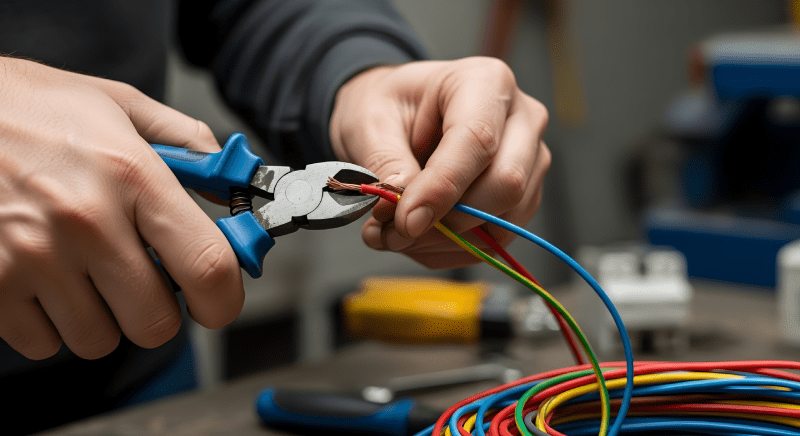
Summary of Journeyman Lineman Knowledge and Qualifications on Resume
1. BS in Electrical Engineering with 5 years of Experience
- Journeyman Lineman Certification
- First Aid/CPR Certification
- Lineman experience, in transmission and/or distribution
- Knowledge, skills, and abilities to work in the capacity of a Power Lineman without direct supervision
- Ability to supervise subordinate line workers
- Must have good communication and teamwork skills
- Must comply with OSHA and other Federal, State, and local safety regulations.
- Must be able to communicate effectively with the public and co-workers.
- Demonstrated the ability and skill to work with a minimum of supervision.
- Must be available for call-outs and willing to work extra and irregular hours.
- Ability to perform the essential functions, duties, and responsibilities of the job
2. BS in Power Systems Technology with 4 years of Experience
- Journeyman Lineman Certificate.
- Demonstrated commitment to working productively and safely.
- Excellent verbal and written communication skills.
- Ability to successfully work with customers on a wide range of concerns.
- Be able to attend and take part in safety meetings.
- Be able to work under unusual surroundings, as well as the normal working conditions for this job.
- Be able to receive and transmit orders and instructions in such a manner as to inspire respect and confidence of both superiors and subordinates.
- Be able to meet the public pleasantly and tactfully.
- Must be able to perform the essential functions of the position, with or without reasonable accommodation.
- Must be self-motivated and possess a positive attitude.
3. BS in Industrial Technology with 6 years of Experience
- Tower Rescue Certification
- Verifiable work experience as a Journeyman Class 1 or A-level craft worker
- Be able to work in direct sunlight or at night
- Proficient with live line maintenance (gloving) up to twenty-three (23) KV and the use of hot sticks (change to 2 words) for all voltages
- Be able to complete a structured apprenticeship program or equivalent.
- Excellent time management skills
- Ability to wear company-provided Personal Protective Equipment (PPE)
- Ability to work and drive in all types of weather and road conditions
- Ability to travel and transfer to a new headquarters upon request at any time, throughout the entire PG&E service territory
- Ability to recognize hazards in the workplace and have the ability to mitigate the hazards.
- Ability to maintain and care for Company equipment properly and safeguard assets.
- Ability to meet the public pleasantly and tactfully, and understand the importance of delivering a high level of customer service.
- Ability to recognize opportunities for process improvement.
Editorial Process and Content Quality
This content is developed by the Lamwork Editorial Team using structured analysis of real-world job data, skill requirements, and hiring patterns.
Research framework by Lam Nguyen, Founder & Editorial Lead.
Reviewed by Thanh Huyen, Managing Editor.
Learn more about our editorial standards.