EQUIPMENT MECHANIC SKILLS, EXPERIENCE, AND JOB REQUIREMENTS
Updated: Jun 12, 2025 - The Equipment Mechanic has extensive experience in maintaining and repairing construction equipment, diagnosing mechanical malfunctions, and performing skilled adjustments on gas and diesel-powered vehicles. This role requires proficiency in using diagnostic tools for engine performance tests, welding, fabricating, and modifying equipment while ensuring safety precautions. The mechanic is also skilled in operating a computerized Fleet Management Program to manage work orders and capable of test-driving various fleet vehicles for diagnostics.
Essential Hard and Soft Skills for a Standout Equipment Mechanic Resume
- Fleet Management
- Preventive Maintenance
- Electrical Repair
- Plumbing Repair
- Mechanical Troubleshooting
- Equipment Maintenance
- Welding
- Fabrication
- Work Order Reading
- Equipment Repair
- Flexibility
- Attendance
- Customer Service
- Training
- Emergency Assistance
- Policy Adherence
- Mentoring
- Safety Emphasis
- Documentation
- Communication

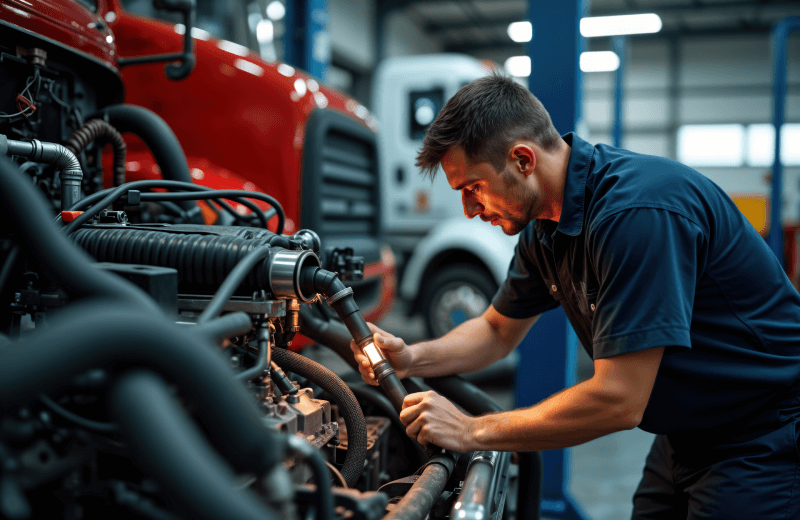
Summary of Equipment Mechanic Knowledge and Qualifications on Resume
1. BS in Equipment Maintenance with 1 year of Experience
- Basic knowledge of mechanics.
- Basic knowledge of the fields of electricity/electronics and industrial hydraulics/ pneumatics.
- Basic knowledge of the use of electronic test equipment.
- Basic knowledge in the reading, and interpretation, of electrical schematic drawings and engineering blueprints.
- Ability to troubleshoot/identify root causes, and systematically solve problems.
- Knowledge of basic IT skills and MS Office Applications.
- Ability to read, and write, reports and procedures in various formats.
- Ability to read, and interpret, electrical schematic drawings and engineering blueprints.
- Ability to interpret a variety of instructions furnished in written, oral, diagram, or schedule form.
- Ability to apply critical thinking and solve practical problems in a variety of situations.
- Ability to effectively present information and respond to questions from groups of managers, customers, and quality auditors.
- Ability to compute angles, slopes, and degrees, using basic geometry and trigonometry.
- Good mathematical skills including addition, subtraction, multiplication, and division.
- Understanding of the metric system.
- Ability to use electronic test equipment.
- Capable of working in a team environment with the ability to work under pressure and manage multiple tasks simultaneously.
2. BS in Mechatronics Engineering with 3 years of Experience
- Experience in automotive or diesel mechanics and/or auto body repair.
- Ability to successfully acquire ASE certifications A1 through A8 within 6 months of employment.
- Ability to lift and carry up to 20 pounds constantly and up to 50 pounds occasionally with or without accommodation
- Must be able to work on ladders.
- Ability to work under a variety of extremes of temperature and weather, both inside and outdoors.
- Willingness and ability to work overtime as needed.
- Willingness and ability to respond to after-hours emergencies.
- Willingness and ability to report to work during declared periods of inclement weather.
- Experience managing the maintenance of a fleet of vehicles.
- Maintenance experience in large residential or commercial buildings.
- ASE certifications A1 through A8.
3. BS in Mechanical Engineering with 2 years of Experience
- Experience maintaining mining heavy equipment
- Experience with Caterpillar (CAT) auxiliary equipment, Komatsu haul trucks, Komatsu and Hitachi hydraulic shovels, and/or CAT7495 and PandH 4100 cable shovels
- A valid Alberta Journeyperson Heavy Equipment Technician (Off-Road) and Truck and Transport (On Road) Certificate or an Interprovincial Red Seal Journeyperson Heavy Duty Equipment Mechanic/Technician (Off-Road) and Truck and Transport (On Road) Certificate
- Prior experience working with SAP
- Exceptional safety mindset and a strong dedication to continuous improvement within safe work practices, procedures, and standards
- Superior mechanical aptitude and troubleshooting skills
- Proficient with computers to retrieve data for equipment maintenance
- Strong work ethic, motivation, and initiative and can make decisions with integrity to achieve the best results and deliver the most value
- The proven ability to provide personal and technical mentorship to other team members by building strong, positive relationships
- Self-directed with the ability to handle the mental and physical stress/pressure to complete all jobs, including emergencies.
4. BS in Automotive Technology with 5 years of Experience
- Mechanic experience or a satisfactory equivalent combination of experience and training.
- Experience in maintenance and repair of construction equipment.
- Knowledge and skill in standard methods, materials, tools, equipment, and technology of the mechanic trade.
- Knowledge of mechanical principles, occupational hazards, and safety precautions.
- Skills in testing equipment used for testing and repairing starting systems, charging systems, front-end alignments, engine performance testing, hydraulic systems, air conditioning, fuel systems, drive trains, and related automotive and heavy equipment components.
- Knowledge of diagnosing and making skilled repairs and adjustments.
- Experience in locating, diagnosing, and repairing most mechanical malfunctions in gas and diesel-powered vehicles and equipment.
- Understanding of welding, fabricating, and modifying equipment, and performing engine performance tests and repairs on diesel and gas engines using diagnostic tools.
- The ability to use a computerized Fleet Management Program for opening and closing work orders and related fleet programs.
- Able to drive all County equipment/vehicles on roads to test drive and diagnose.
Editorial Process and Content Quality
This content is developed by the Lamwork Editorial Team using structured analysis of real-world job data, skill requirements, and hiring patterns.
Research framework by Lam Nguyen, Founder & Editorial Lead.
Reviewed by Thanh Huyen, Managing Editor.
Learn more about our editorial standards.